From seed to bag, it never left our hands.
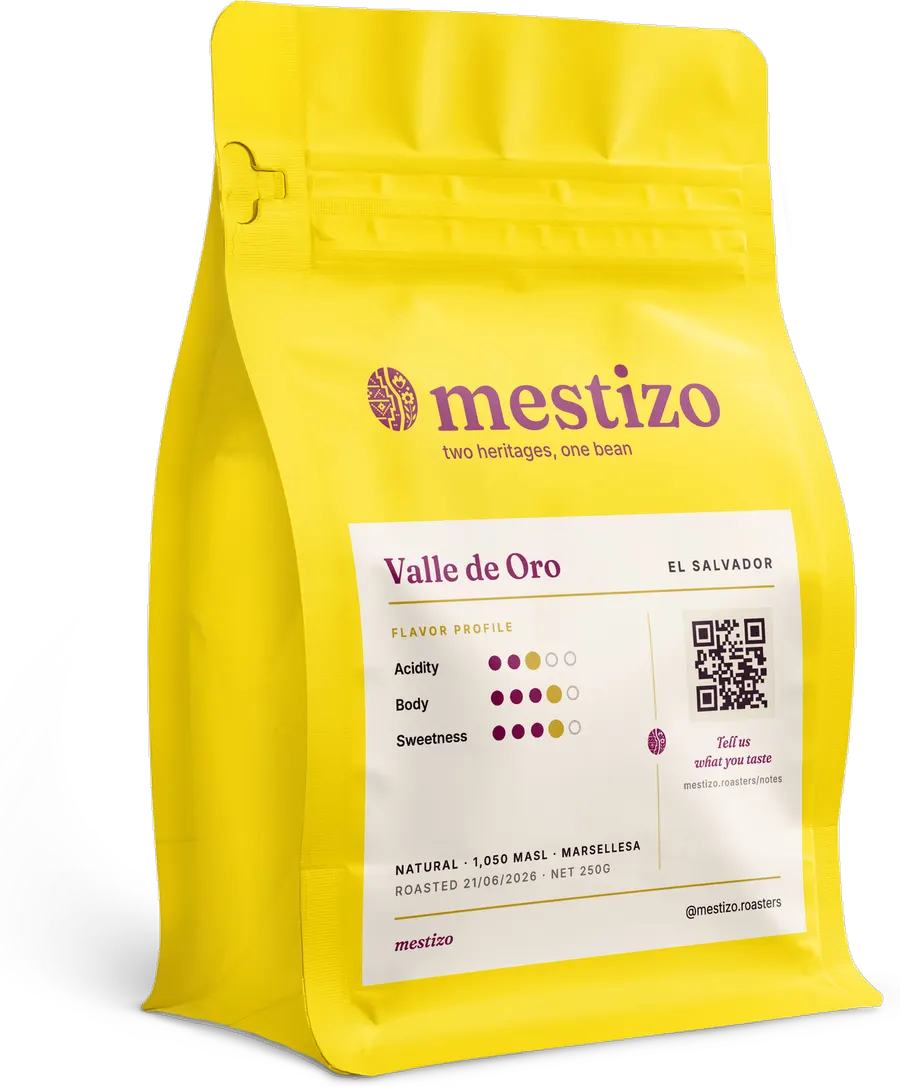
El Salvador · Barrel 24h · 1,050 masl · Marsellesa · 3 × 80g
Sample roasted, not yet for sale
See the whole chain
Valle de Oro Barrel 24h
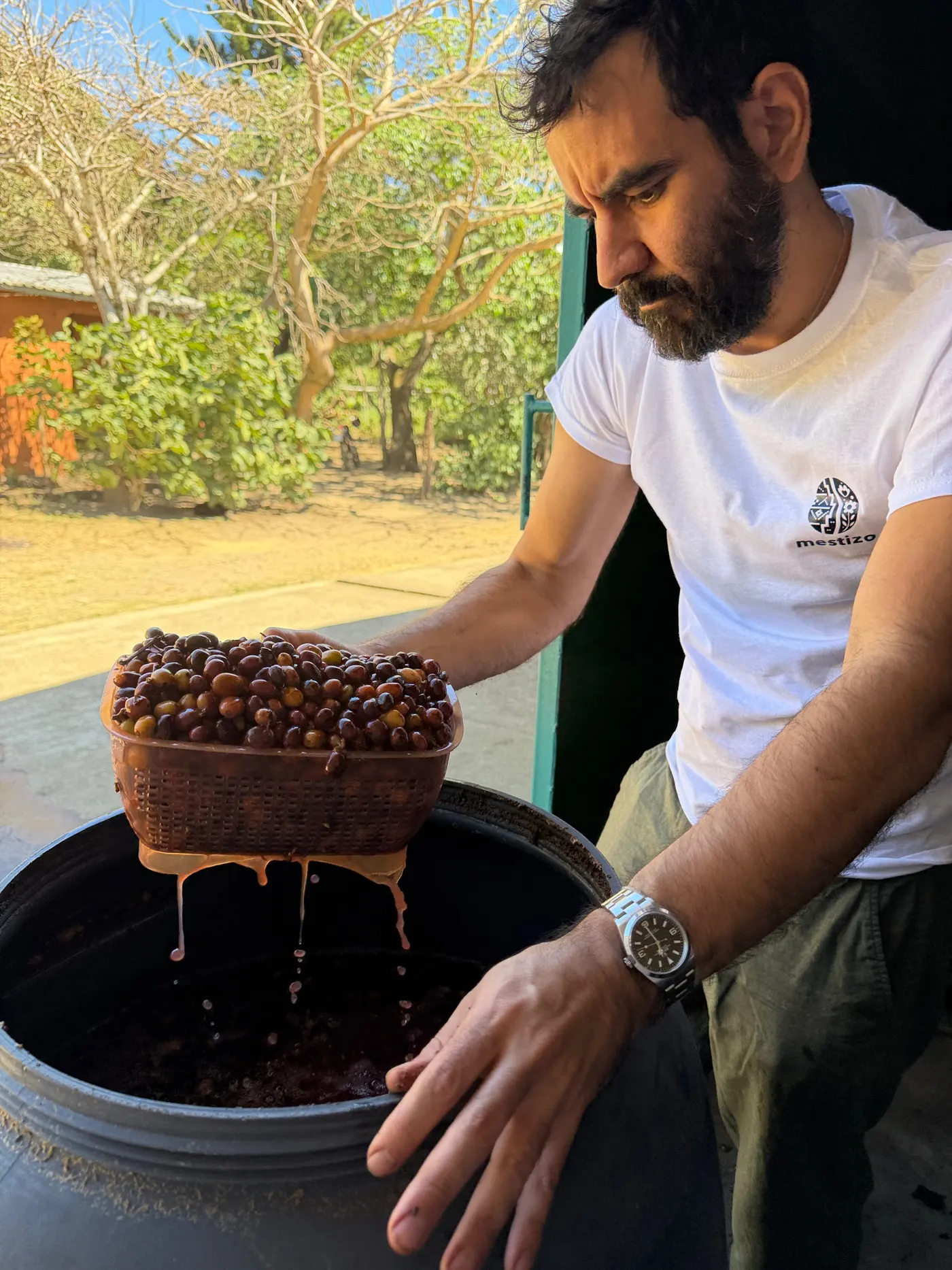
Barrel ferment in water, 24 h
Intense chocolate. A barrel ferment in water for 24 hours.
Roast date pending
Every link in the chain is ours.
Most coffee travels through a chain of strangers: grower, mill, exporter, importer, roaster, and you taste every handoff. Ours has none. Five links, all of them ours, so we can maximise every part of the value chain and fine-tune it end to end.
Grown
Valle de Oro, San José de la Majada, Sonsonate, at 1,050 metres. Miguel owns it. Don Julio of Lean Coffee Management runs the agronomy and has for years. Marsellesa only, from seed bought at ECOM CRIAD in Nicaragua and a decade of in-house selection, with no herbicides and no pesticides.

Processed
Fermented in a barrel of water for 24 hours. Submerged and cut off from air, the fruit's own microbes work the sugars.

Exported
By MAVCOFFEE, the family company Miguel runs. The producer files the paperwork, loads the container and ships the coffee. Nothing changes hands between the farm and the roaster. The exporter is us.

Roasted
By Joanna. An engineer before she was a roaster, with years at Ikawa behind her. She measures a roast and writes it down so she can do it again on purpose. How the coffee tastes once it is in the drum is hers.

Yours
A yellow bag and a brew you made yourself. Every step before it was ours, so if anything is off, we know exactly which link to check. Ask us anything; the answer is one of us.
Direct trade usually means a roaster who once visited a farm. This is shorter: the producer, the exporter and the roaster share one table. You cannot get more direct than that.
The farm, in its own words.
Fermentation is where a coffee gets most of its character, before the roaster ever sees it. In a barrel of water the cherries ferment submerged, cut off from air, and the microbes that live on the fruit work through its sugars in the dark. As they do, the acid in the pulp shifts from mild toward something juicier and finer, and what they leave behind is locked into the bean.
This one is the short ferment: a day in the water, enough for the sugars to move without losing the coffee underneath. We tasted it and got intense chocolate.