Two of us. That is the whole company.
Miguel grows the coffee in El Salvador. Joanna roasts it in the same country, though she did not grow up in it. Mestizo is the name for what happens where those two things meet.
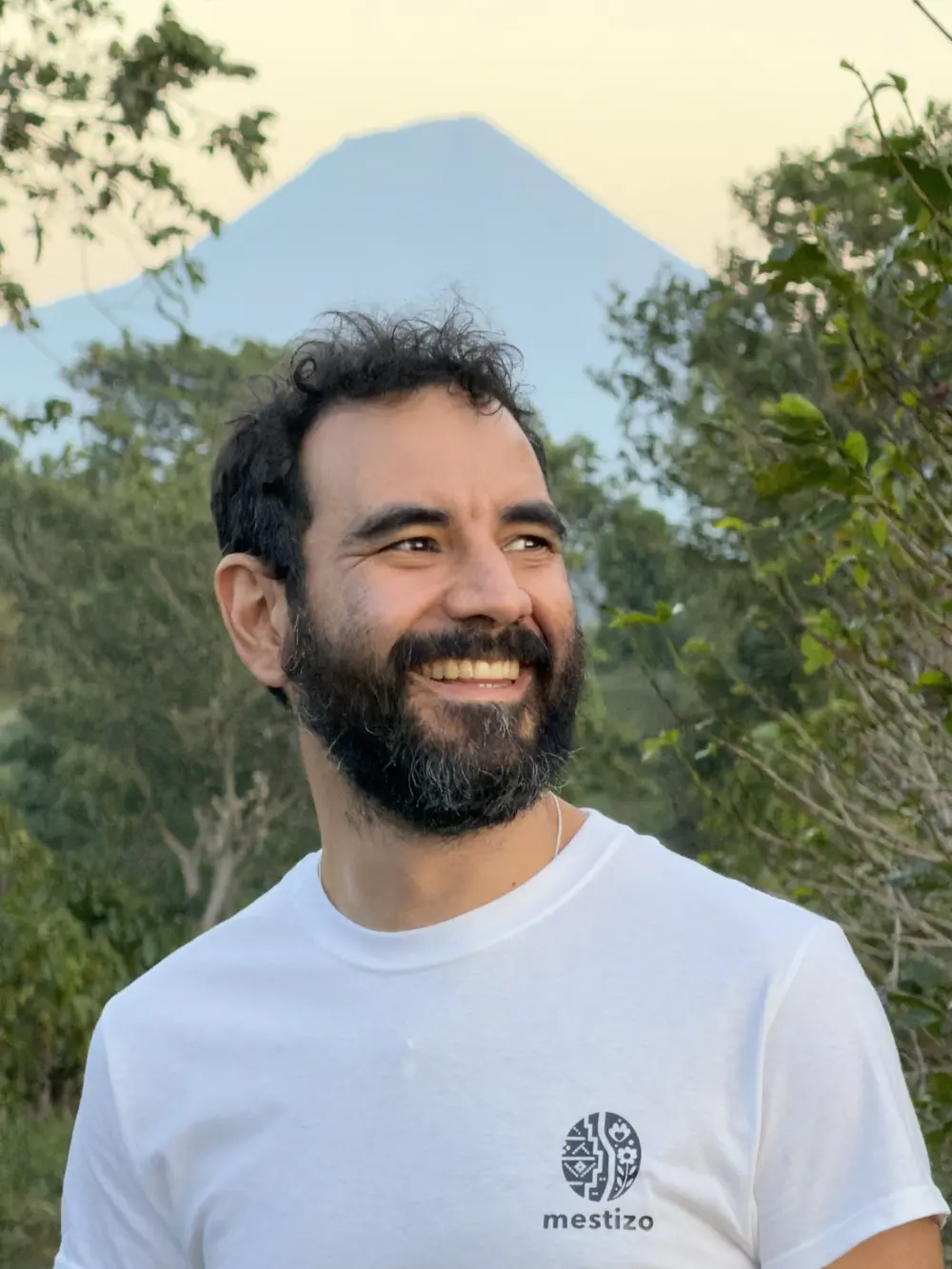
Miguel
Salvadoran, and the reason there is anything to roast. He owns Valle de Oro and grew up around it: the flat ground in Sonsonate, the replanting, the trees. In 2007 the farm pulled out its Pacas and Pacamaras and replanted all twenty-one cultivated hectares with Marsellesa, a hybrid specialty did not take seriously at the time. The bet was that rust and a changing climate were coming. It was right, years before the industry agreed.
The agronomy itself is not his: that is Don Julio, of Lean Coffee Management, who has run it for years and decides what the trees need and when. Everything that happens before the coffee leaves the country is Miguel's.
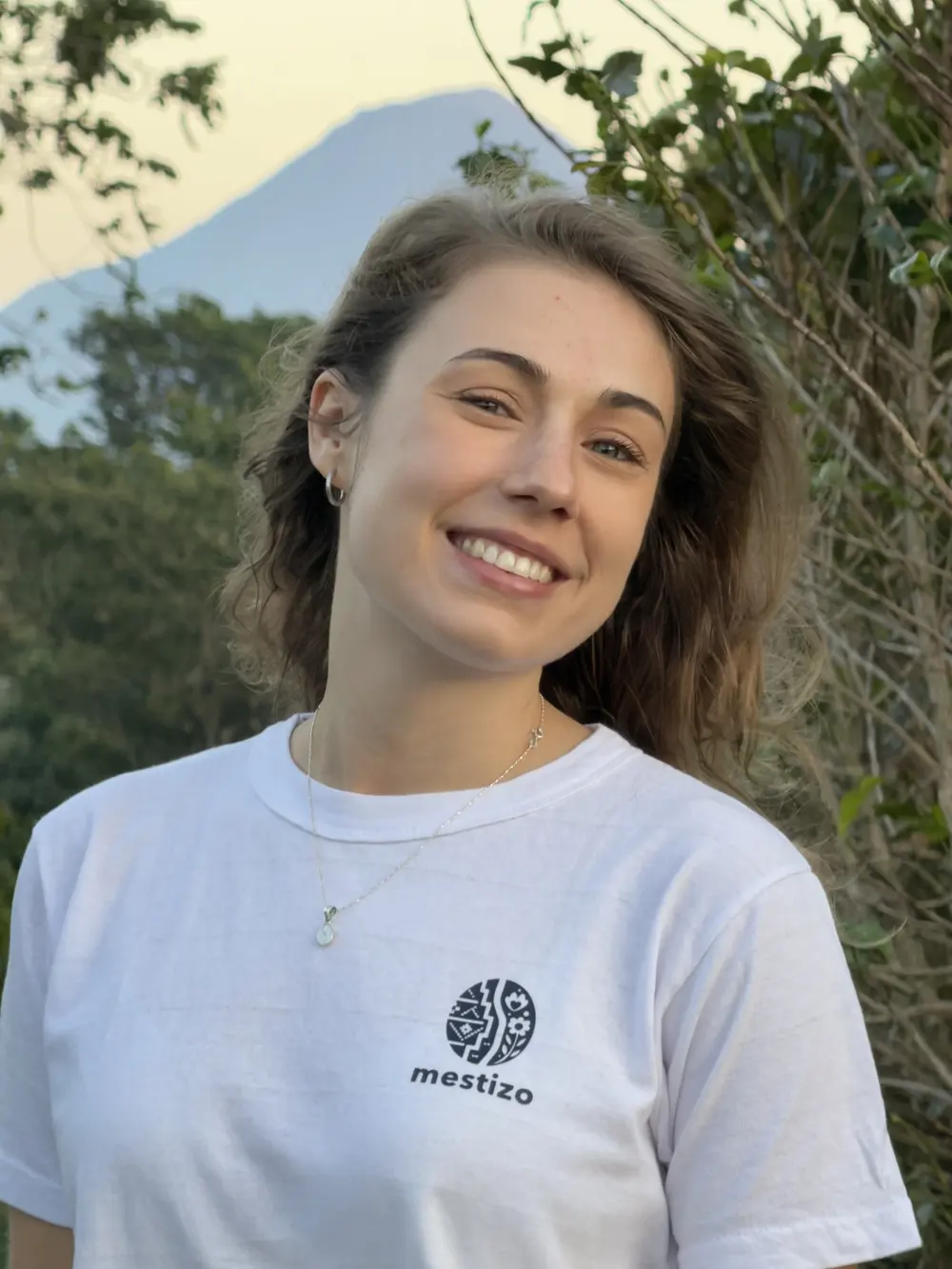
Joanna
Polish, and an engineer before she was a roaster. Before coffee she worked in hospitals, where long hours meant caffeine was a normal part of the working day. Coffee was fuel, and a small daily pleasure. Curiosity about what stood behind the cup led her to a new path: first with Ikawa, traveling the world to roast, learn, and connect producers with roasteries, growing fascinated by everything coffee goes through from harvest to cup.
In 2025 that journey brought her to Central America, where she fell in love with the land and its coffee. Soon after, together with Miguel, she founded Mestizo: a direct, transparent journey from farm to cup, combining his knowledge of the land and coffee with her curiosity and engineering mind. Today she samples, profiles, roasts, and experiments with ferments, bringing together Miguel's Salvadoran heritage and her Polish roots to put a little Salvadoran sunshine in every cup.
two heritages, one bean
One coffee, from Miguel's farm in El Salvador, roasted by Joanna. There is no shop here yet, so ask us for a bag and we will sort it out like people.
Ask us for a bagSee the coffee